
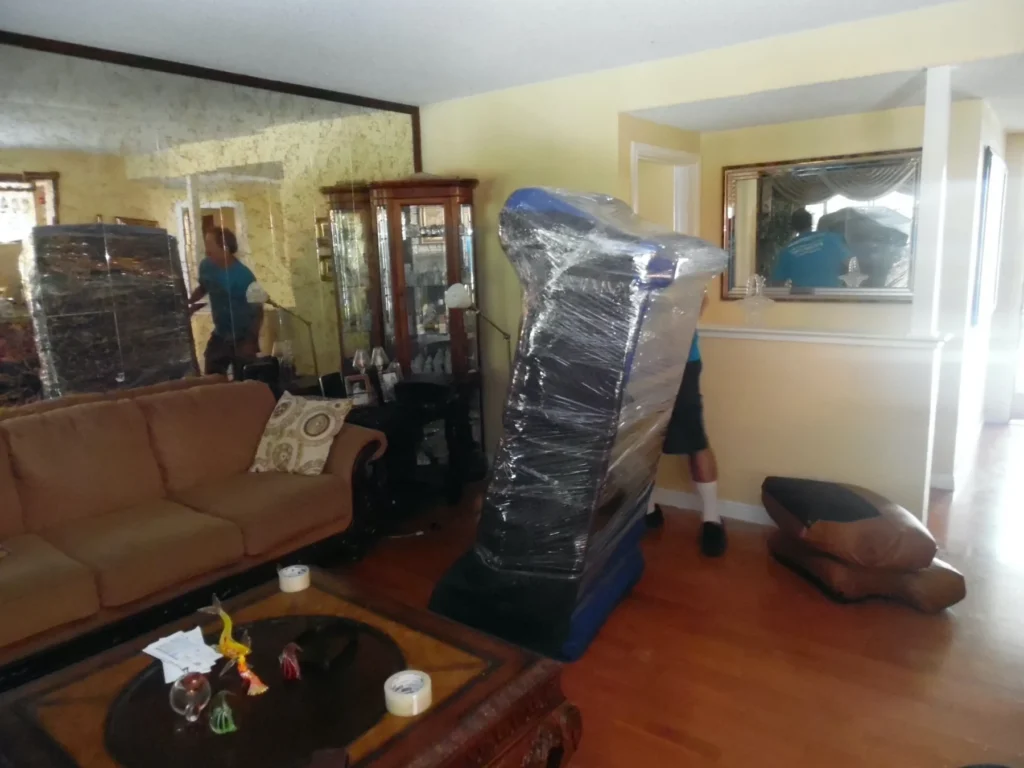
Walk through one space at a time
List the larger furniture first, then estimate packed cartons and loose belongings. Check cupboards, closets, outdoor areas, and storage spaces so the inventory does not stop at the obvious rooms. Start with the rooms that hold the heaviest pieces, then work through the rest of the house in the same order you will use on moving day.
Give each item a destination
Use the room names from the next property. Separate items that are staying behind, going to storage, or moving to a family member. A short note beside a larger piece can explain placement or handling questions. Group items by room on the list so the crew can load and unload in the same order, and label each carton with the destination room.
Add the access details
Describe stairs, elevators, loading locations, and narrow turns at both addresses. Photographs help explain the route for furniture that needs closer review. Include the door widths for large pieces, the exterior steps, and any long carry between the truck and the door. Note whether the truck can park at the curb or needs a driveway, and whether the building requires a freight elevator booking.
Note the exceptions
Flag items that should not be boxed, such as hazardous materials, perishable food, plants, and personal documents. Keep the first-night bag, medicines, chargers, and keys separate from the main load. If a piece needs disassembly, write down which tools are needed and where the hardware goes, and mark the carton so the reassembly is not delayed.
Use the list in your request
Send Joe’s Moving Inc the inventory with your addresses, preferred dates, and packing needs. Update the team if the load changes. Keep a copy of the agreed scope and the placement plan available on moving day, and review the list once more before the crew arrives so nothing is left out.